First up, the check-in. I have been really slacking on this journey the past couple of weeks. I could blame work for being busy or 6-month out wedding stuff, but really I just haven’t made time for my creativity (which is what week 8 is about btw).
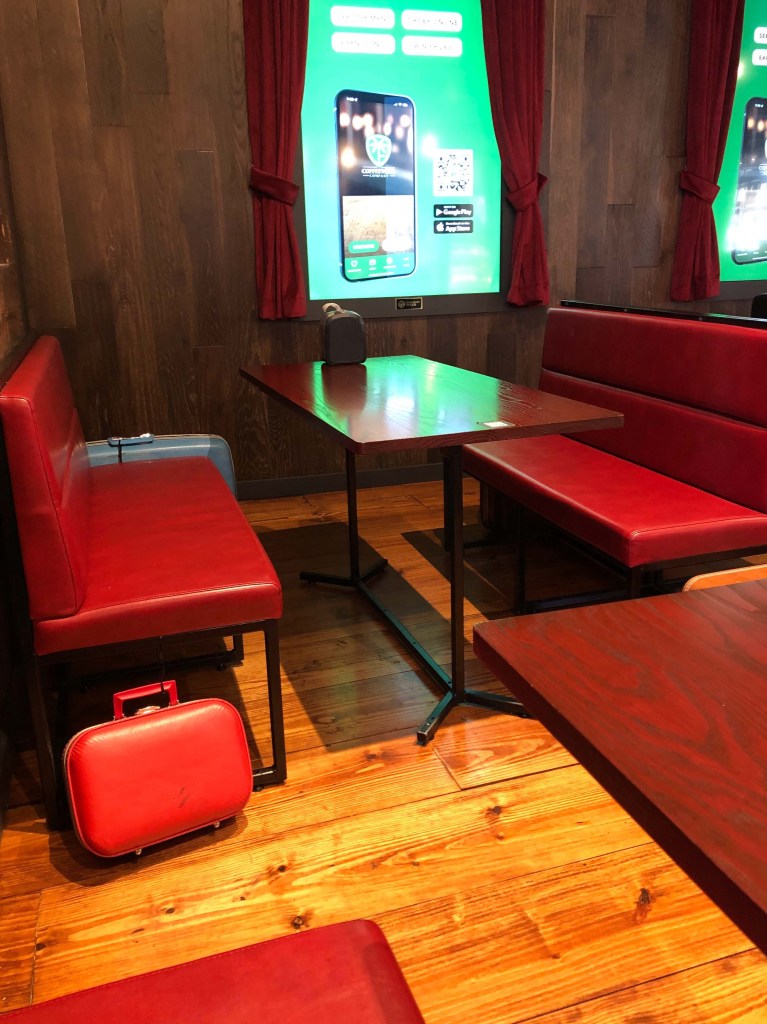
I actually really miss the journaling part. I only did that about twice this week. I DID go on an artist’s date while I was busy running errands in Milwaukee for the upcoming wedding. I went to a cute little coffee shop that is train station themed. It was super cute! The matcha latte I had was delicious as well. They had a wall of screens spaced like windows that played acted out scenes from a train platform. The performers all looked like high school students so I’m sure it was somebody’s school project but it was adorable. Also it was a great ambience next to the real train tracks when the train would pass through. I sat there and had my tea and read some of my book. It was delightful.
This week we turn to the practice of right attitudes for creativity. The emphasis is on your receptive as well as active skills. The essays, exercises and tasks aim at excavating areas of genuine creative interest as you connect with your personal dreams.
The first idea Julia looks at is in “listening.” I used to be very good at listening to the creativity around me. Sitting quietly and observing the world and how it works to get ideas for stories or characters or scenes. As more and more has taken space in my mind, I tend to not lean toward creative thinking but more toward listing what needs to be done. Then the creativity feels more like sitting at the computer pulling teeth rather than sitting and just putting down what comes.
I did a bit of listening this week. I started a new short story that I’m really enjoying by just letting myself write what was coming to me.
To Julia, creativity is an ever present force that the creative can dip into. Inspiration is not the ideas coming to you but you going to where the ideas are and listening to them. That’s what the morning pages are meant to be for. We sit with our thoughts and tap into what ideas are already present.
The next piece she dives into is perfectionism. I am a terrible offender of not doing something because I wouldn’t do it perfectly. That may be from the “good kid” fallacy that I grew up believing. If I can’t be “good” at the thing right away, why bother? That still leeches into my writing.
My current novel I’ve been working on since 2020. That’s 4 years of drafting, editing, rewriting, etc. But, a lot of that time was me simply…not working on it. Why? I wanted to get it right and I was struggling to accept certain changes as “good enough” and move on. There will be other novels, there will be better novels, but I am having such a hard time letting this one just…be.
This goes beyond writing as well. I am scared to get further into baking because I’m scared of having terrible results at the start. I’m scared to start running because I know I won’t be able to even make it 5 minutes at first. I’m scared to really tear into my garden because I’m scared it will look terrible. So many things I’m not starting and would probably enjoy, all because I’m scared of the starting results.
This leads into the next topic of “risk.” I am clearly very risk averse. But it’s not really a huge risk to finish a book, or bake a pie, or plant a rose bush. We often snowball our ideas into things that aren’t even possible at the moment. “Well, what if I finish this book? I’ll have to go on tour and that might affect my job.” No…if you finish the book then you have to figure out what to do with it. It’s not a cause and effect that works that fast. There are no guarantees for a path. Learning to bake doesn’t mean you’ll suddenly open a bakery and have your whole life flipped upside down…it might mean you’ll have something awesome to bring to friends. Gardening doesn’t mean you’ll have to suddenly start giving advice to other gardeners…it might mean you have extra tomatoes to give to neighbors. Lowering the risk of starting a project would definitely be helpful.
If I didn’t have to do it perfectly, I would try . . .
- Poetry
- Ceramics
- Pastry Baking
- Garden design
- Furniture restoration
- More serial novels
- Self publishing
- Graphic design
- Oil painting
- Photography
- Voice lessons
- Re-learning piano
- Running
- Vlogging
- House renovations (DIY)
- Art journaling
- Book reviewing/bookstagram
- Off-leash training for the dog
- Hiking
- Short stories
The next piece of this week is “jealousy.” What are we jealous of someone else for? It can be super mundane to bigger achievements. Like jealousy over somebody always finishing new projects. But then Julia asks us to go deeper. What would we need to do to accomplish that thing? The “antidote” for our jealousy. In this case, work on my own projects more often. “Green is the color of jealousy, but it is also the color of hope.”
I loved this exercise as it really points out the underlying factor of jealousy. It’s not that they are doing better than us, often times it’s simply that they are doing more or different than us. By looking at exactly what we can do to get to that same point in our lives feels productive rather than simply cynical with jealousy.
Julia then asks us to do some “archaeology” of our self. Since most of us have an inner artist that is heavily influenced by our inner child, diving into what we lost or missed during our childhood, but also acknowledging the positive in our adult life as well.
Complete these phrases:
- As a kid, I missed the chance to . . .
- As a kid, I lacked . . .
- As a kid, I could have used . . .
- As a kid, I dreamed of being . . .
- As a kid, I wanted a . . .
- In my house, we never had enough . . .
- As a kid, I needed more . . .
- I am sorry that I will never again see . . .
- For years, I have missed and wondered about . . .
- I beat myself up about the loss of . . .
Finish these phrases:
- I have a loyal friend in . . .
- One thing I like about my town is . . .
- I think I have nice . . .
- Writing my morning pages has shown me I can . . .
- I am taking a greater interest in . . .
- I believe I am getting better at . . .
- My artist has started to pay more attention to . . .
- My self-care is . . .
- I feel more . . .
- Possibly, my creativity is . . .
A lot of this chapter is re-connecting with the positive or reframing the negatives. She leaves us with the idea that “Treating myself like a precious object will make me strong.“
We do not need more tough love on ourselves, especially if we’re already feeling down-trodden and inspiration-less. Being gentle with ourselves and cherishing what we love about ourselves can give us more strength than pointing out the flaws.
Happy Creating!
Rachel

 Subtle Stories